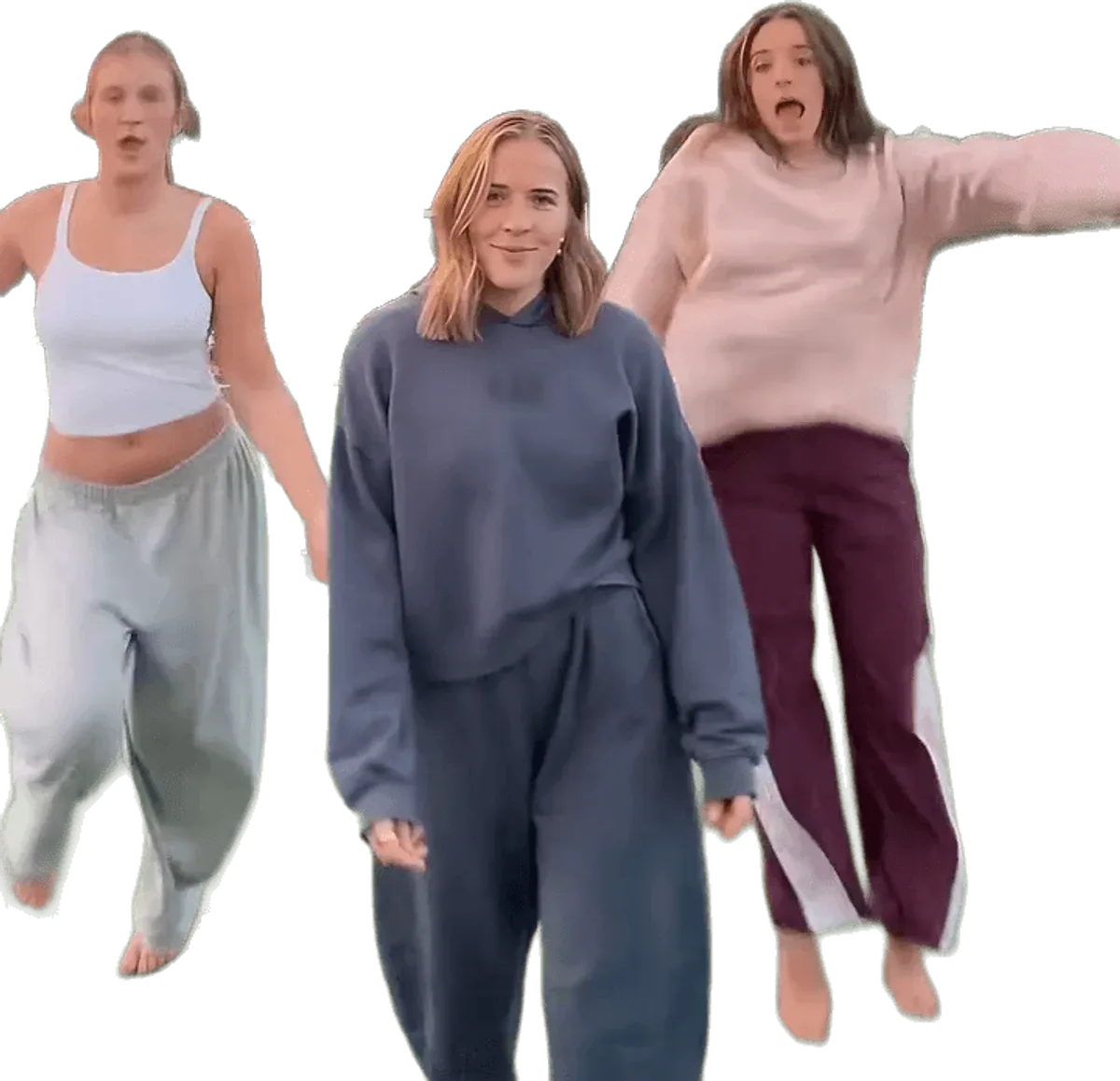
The chipmunks dance prompt
The chipmunks dance prompt has to do five things at once: swap all three dancers by position, keep each face through the spins, keep the place, camera and timing of the viral clip, fill any empty spot with a stand-in, and add no costumes. Getting one of them wrong ruins the video. On Chipmunks Dance Trend the prompt is already written and tested for every dance. Make the video from your photos.
What the prompt has to solve
People searching for a prompt expect one tidy paragraph. The real job is a list of constraints that pull against each other, because the video model wants to reinvent things and this trend only works if it does not.
- Swap all three dancers, by position. The viral clip has three people. The result needs exactly three, with you in the middle and friends on the left and right. Leave the position vague and the model swaps one dancer, or two, or adds a fourth.
- Keep each face through the spins. The routine turns its back to the camera, spins and drops. A face that is right in the first second often changes after the first turn. The instruction has to hold each identity steady through the whole move.
- Keep the place, the camera and the timing. The court, the hallway or the street, the light, the camera angle and the beat of each move are the clip. If they drift, you no longer have the trend, you have a different video.
- Stand-ins for empty spots. With one photo, the two side dancers must still dance, as ordinary people who look like nobody in particular, not as the original dancers.
- No costumes, no cartoon. The name suggests ears and red, blue and green outfits. The prompt has to keep real people in the clothes from their photos instead.
Why copied prompts fail
Even a well-written prompt fails when it is pasted somewhere else, for reasons that have nothing to do with the words.
- The original dancers stay in. Without the right inputs the model keeps one or more people from the viral clip and only changes the rest.
- The wrong number of dancers. Two appear, or four, because the count was never pinned to the three positions.
- Faces drift in the back-turned seconds. This is the most common complaint, and a vague instruction makes it worse. Even with a good setup a face can drift for a moment, which is the current limit of AI video.
- The timing slips. The swaps happen early or late, so the moves no longer land on the sound.
- Different model, different result. The same text behaves differently on another version of the model. The video here is ByteDance Seedance, and each dance has been set up for it.
Each failed attempt on a general tool also costs money. That is why the next section matters.
What is built in here
Every one of the 6 dances is a real viral clip with its own tested setup. You add 1 to 3 photos, pick a dance and press Generate. The wording, the order of the photos, the settings and the sound are handled for you, and the same dance behaves the same way each time. There is no field to type in, so there is nothing to get wrong.
For the four steps, see how to make the video. If you wondered whether a filter does the same, the filter page answers that. Likeness is not guaranteed, and in the seconds when the dancers face away a face can drift, so a sharp, front-facing photo of one person is the best input.